



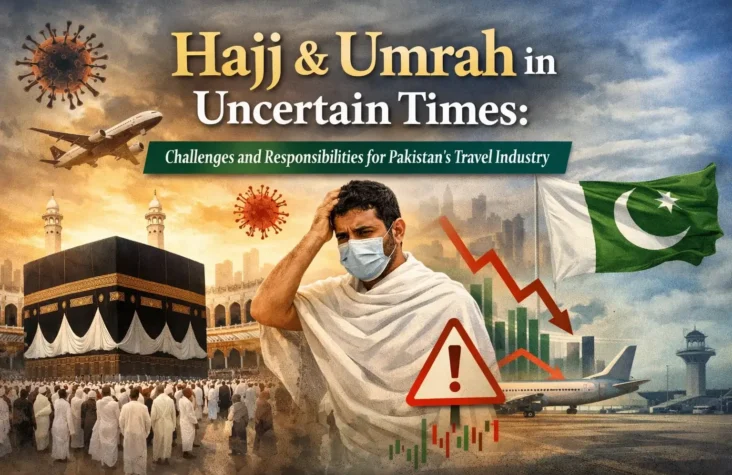
Hajj & Umrah in Uncertain Times: Challenges and Responsibilities for Pakistan’s Travel Industry
Hajj and Umrah are not just journeys, they are deeply spiritual obligations and lifelong dreams for Muslims across the world, especially in Pakistan. Every year, hundreds of thousands of Pakistani pilgrims travel to Saudi Arabia with hope, faith, and devotion.
However, in light of recent geopolitical tensions in the Middle East, particularly the ongoing Iran conflict, the Hajj and Umrah travel ecosystem is facing serious disruptions. For Pakistani pilgrims and travel operators alike, these challenges demand careful navigation, responsibility, and strategic planning.
Impact of Regional Conflict on Hajj & Umrah Travel
The Middle East is the heart of global Islamic travel, and any instability in the region has direct consequences on pilgrimage routes.
1. Air Travel Disruptions
Airspace restrictions and security concerns have forced airlines to:
- Reroute flights, increasing travel duration
- Reduce flight frequency
- Raise ticket prices due to fuel and operational costs
For Pakistani pilgrims, who largely depend on connecting flights through Gulf countries, this creates significant inconvenience and financial burden.
2. Rising Costs for Pilgrims
The cost of performing Hajj and Umrah has increased considerably due to:
- Higher airfare
- Currency fluctuations (PKR depreciation)
- Increased accommodation and service costs
This makes pilgrimage less accessible for middle-income Pakistani families, who often save for years to undertake this journey.
3. Uncertainty and Anxiety Among Pilgrims
Pakistani pilgrims are particularly sensitive to regional instability. Concerns include:
- Safety during travel
- Sudden policy changes
- Risk of cancellations or delays
This uncertainty has led to hesitation in booking Umrah packages and concerns among upcoming Hajj pilgrims.
4. Operational Challenges for Travel Agencies
Travel operators in Pakistan are facing:
- Frequent itinerary changes
- Coordination issues with airlines and Saudi partners
- Managing client expectations during uncertainty
For agencies, maintaining trust while handling unpredictable conditions is becoming increasingly difficult.
Unique Challenges for Pakistan
Pakistan’s Hajj & Umrah sector has its own structural complexities that make the situation more challenging:
- Heavy reliance on group travel systems
- Limited direct flight options compared to larger economies
- Strict regulatory frameworks and quotas
- Economic pressures affecting pilgrims’ affordability
Additionally, many Pakistani pilgrims are first-time international travelers, making them more dependent on travel agencies for guidance and support.
What Travel Industry Leaders Must Do
In these challenging times, travel agencies—especially those handling religious tourism—carry a moral as well as professional responsibility.
1. Prioritize Transparency and Trust
Pilgrims must be fully informed about:
- Travel risks
- Possible delays or changes
- Updated costs
Clear and honest communication builds long-term trust.
2. Offer Flexible and Secure Packages
Agencies should introduce:
- Refundable bookings
- Rescheduling options
- Travel insurance where applicable
Flexibility is essential in uncertain geopolitical conditions.
3. Strengthen Coordination with Saudi Authorities
Close collaboration with Saudi partners ensures:
- Better accommodation management
- Smooth transport arrangements
- Compliance with evolving regulations
4. Educate Pilgrims
Providing pre-departure guidance is crucial. This includes:
- Travel updates
- Safety protocols
- Step-by-step pilgrimage guidance
Educated pilgrims are more confident and better prepared.
5. Focus on Cost Management
Travel companies should strive to:
- Negotiate better group rates
- Optimize package structures
- Minimize unnecessary costs
This helps keep Hajj & Umrah accessible to the average Pakistani.
6. Embrace Digital Solutions
Using technology for:
- Online bookings
- Real-time updates
- Customer support
can significantly improve service quality and efficiency.
A Message of Responsibility and Faith
Despite all challenges, the spirit of Hajj and Umrah remains strong. These journeys are acts of faith, patience, and devotion. As members of the travel industry, we are not just service providers—we are facilitators of a sacred experience.
At Allied Travel & Tours, we believe it is our duty to ensure that every Pakistani pilgrim can undertake this journey with dignity, safety, and peace of mind.
Conclusion
The current geopolitical situation has undoubtedly created obstacles for Hajj and Umrah travel, particularly for Pakistan. However, with careful planning, responsible leadership, and a commitment to services, these challenges can be managed effectively.